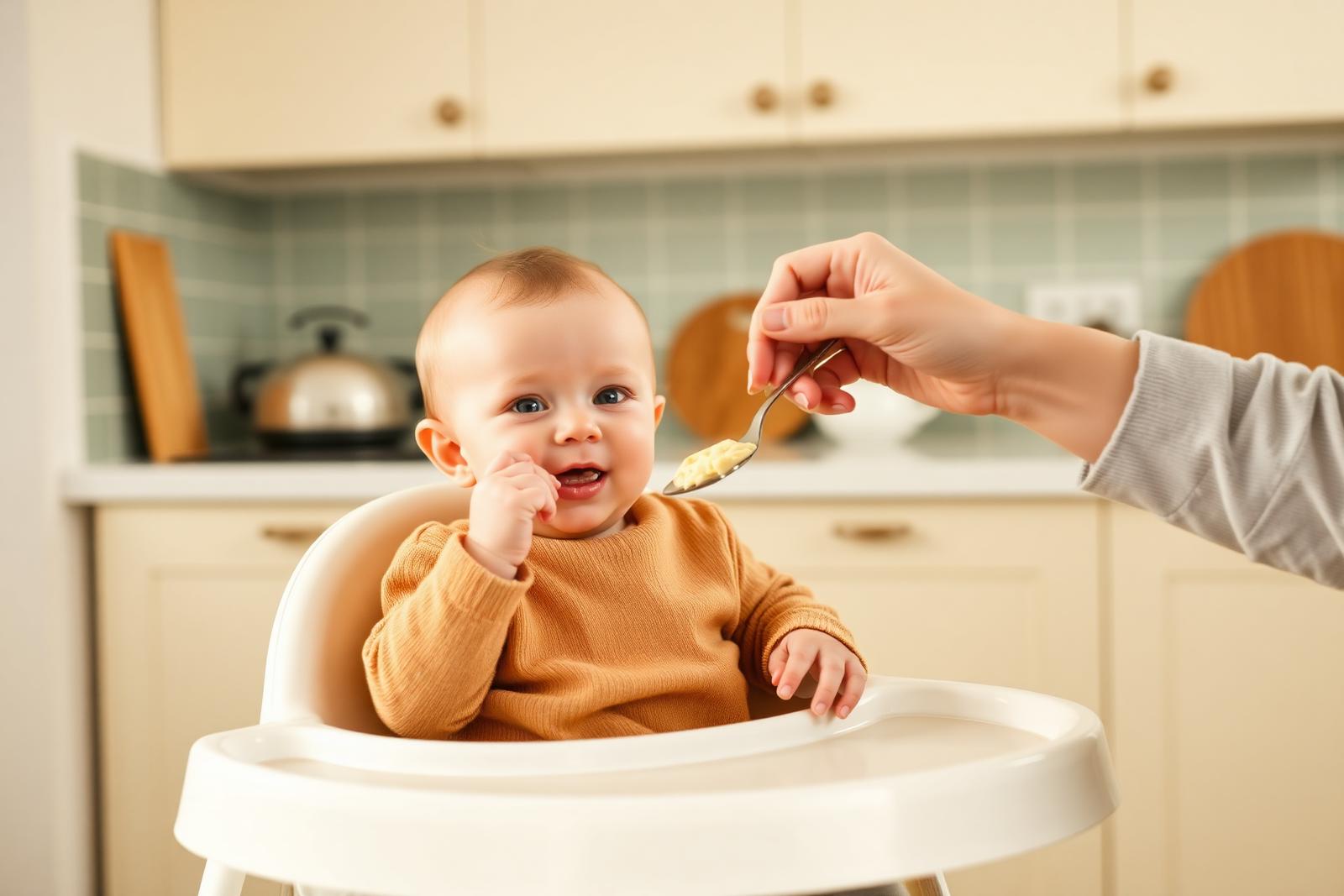
Introducing food to babies
From around six months, a baby needs more than milk. Introducing solids is about nutrition — iron in particular — but also about building confidence and the joy of food from the very first taste.
In short
What is complementary feeding?
It is the transition from milk only to solid food gradually covering more of the need. Milk — breast milk or formula — remains the most important source through the first year.
Around six months most babies are ready: they sit with support, show interest in food and have lost the reflex that pushes food out.
The first months are as much about practising taste, texture and the meal situation as about the amount of food.
Glossary
- Taste portions
- Tiny amounts of food on a spoon for practice, not to fill up.
- BLW
- Baby-led weaning — the baby eats soft pieces themselves instead of purée.

Does this sound familiar?
This might sound like your situation
Most questions are about timing, amounts, texture and allergens.
- First-time parents who want to get it right
- A baby born prematurely or growing slowly
- A family with allergies in close relatives
- A vegetarian or vegan family
- A baby about to start nursery
SmartEating recommends
What makes the biggest difference?
Five things that matter most in the first months of solid food.
Start with iron
Iron-rich food in the very first meals covers the need as the body's stores run low.
Don't delay allergens
Early and regular introduction of common allergens reduces the risk of food allergy.
Increase texture in time
Coarser texture from around 8–9 months makes the move to family food easier.
Let the baby decide the amount
You decide what and when — the baby decides how much.
Keep the milk
Breast milk or formula remains the main source of nutrition through the first year.
When should you contact a health clinic or doctor?
- Rash, swelling, vomiting or breathing difficulty shortly after a meal
- The baby grows poorly or falls off the growth curve
- Persistent gagging, choking or swallowing difficulty
- The baby refuses all solid food over a long period
If you suspect a serious allergic reaction, contact a doctor or emergency services immediately.
Common questions
What people ask us most often.
When should we start solid food?
Around six months for most babies. Taste portions can be given from around four months if the baby is ready, but milk is the main source of nutrition all through the first year.
Should we delay allergens like peanut and egg?
No. Current advice is to introduce common allergens early and then give them regularly. With known allergy in the family, get guidance first.
Is baby-led weaning safe?
Yes, with soft pieces of a suitable size and a baby sitting upright and supported. Many combine purée and pieces, which works fine.
Personal nutrition
No two people with introducing food to babies are the same
Some train a lot, some have several symptoms at once, some are pregnant, some have low values on blood tests and some have a busy family life.
That is why people in the same situation need different advice. SmartEating AI learns your situation over time and adapts suggestions to your body, goals and everyday life.
A clinical dietitian gives concrete advice on order, amounts and texture tailored to your child.
With allergy in the family, a plant-based diet or poor growth, we build a plan that secures iron, energy and growth.
READ MORE
The knowledge behind the advice
Children
The childhood years lay the foundation for eating habits, growth, and a relationship with food that often lasts a lifetime. Nutritional needs change rapidly through childhood, and the focus should be on varied, energy-dense, and safe food in a calm mealtime environment.
Iodine
Iodine is a mineral the body needs to make thyroid hormones, which govern metabolism and are essential for brain development in the foetus and young children. In Norway, iodine is one of the nutrients where both too little and too much can cause problems — and where your diet matters a great deal.
Vegetables
Vegetables are one of the most recommended food groups in any diet, known for their low energy content and high content of vitamins, minerals, fibre and plant compounds. A varied and generous intake of vegetables is one of the clearest recommendations in nutrition.

Assessment
A digital form before the session so the specialist knows your situation.

Kick-off conversation
60 minutes online or at a partner clinic.
Personal plan
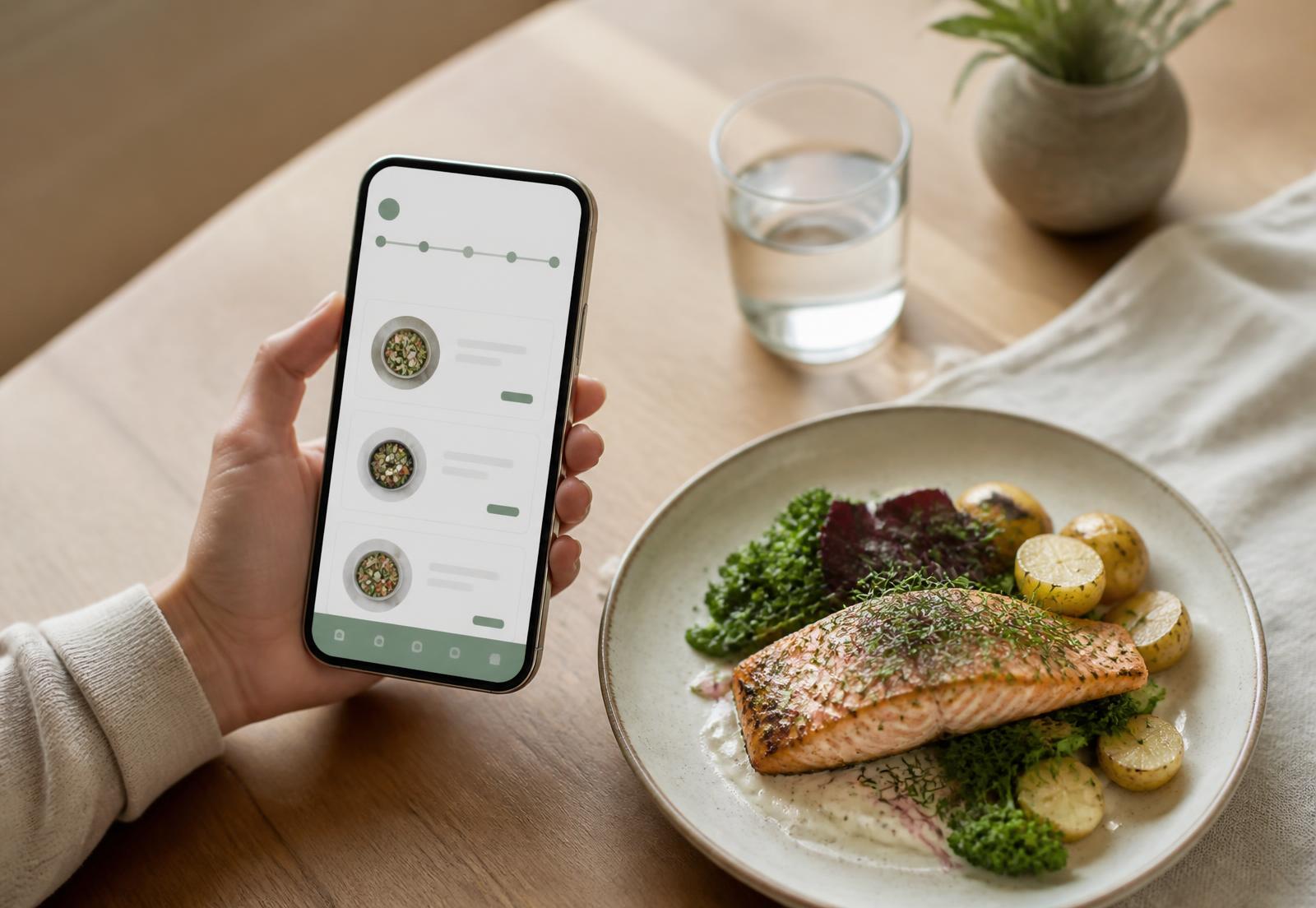
A concrete plan in SmartEating — food, structure and goals tailored to you.
Ready to get help with introducing food to babies?
We'll connect you with a licensed clinical dietitian who understands your situation.

Related topics