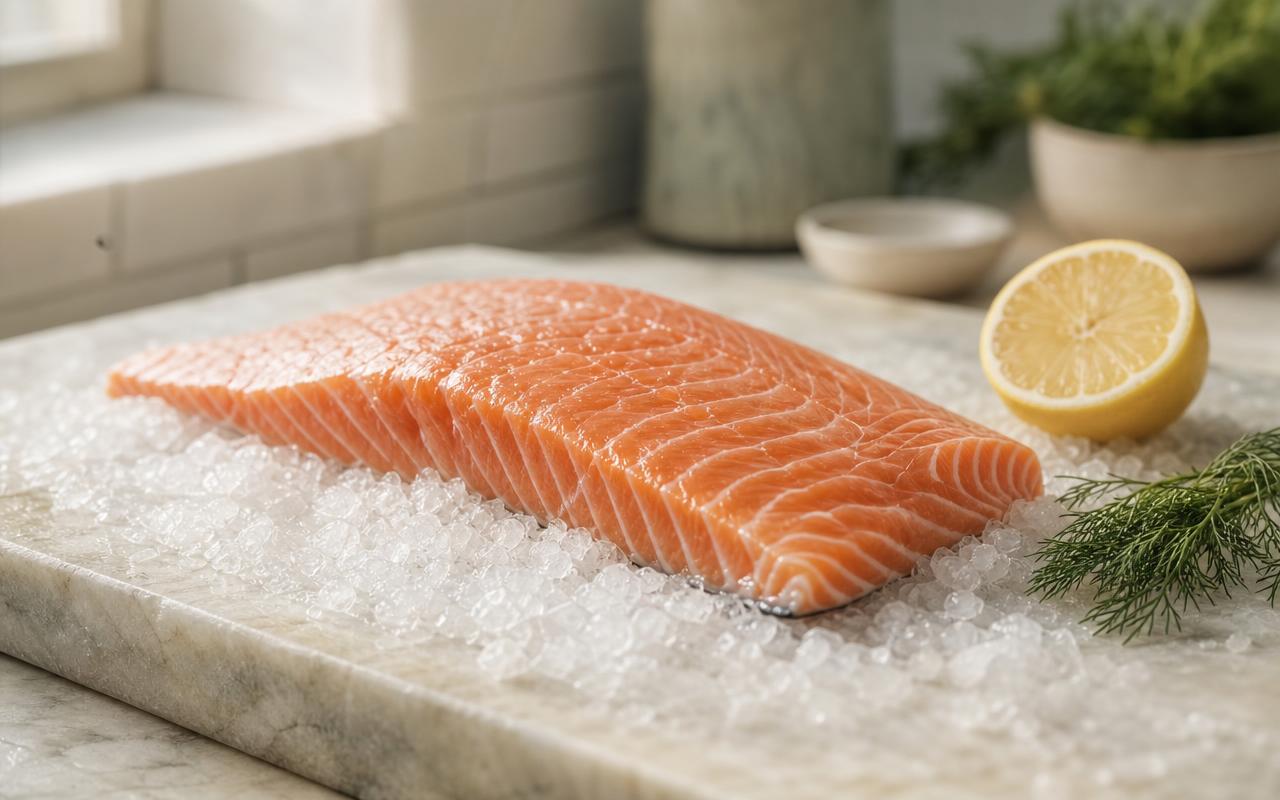
Fish and Seafood
Fish and other seafood are key sources of high-quality protein and the polyunsaturated omega-3 fatty acids EPA and DHA. Regular fish intake is one of the most well-documented recommendations in Norwegian and international dietary guidance.
Quality-assured by Eugenie Meijn, Autorisert helsepersonell
What is this?
Fish is generally divided into oily fish, such as salmon, mackerel, herring and trout, and lean fish, such as cod, saithe and haddock. Oily fish contains more omega-3 fatty acids, while lean fish has very low fat content and is still an excellent source of protein.
Seafood is also an important source of iodine, vitamin D and selenium — nutrients many people in Norway get too little of, particularly those who eat little fish. Shellfish such as shrimp, mussels and scallops also contribute zinc and other minerals.
Fish can be prepared in many different ways, from raw in sushi to steamed, fried, grilled or in stews, and is also available canned, making it easy to keep on hand throughout the week.
Why does it matter?
The omega-3 fatty acids EPA and DHA from fish have a documented role in cardiovascular health, helping to regulate blood lipid levels. DHA is also important for brain and eye development, particularly in the foetus and young children.
Iodine from seafood is necessary for normal thyroid function, which in turn affects metabolism and energy levels. Because many Norwegian diets are low in iodine from other sources, fish plays an important role in meeting this need.
How to get it into your diet
Oily fish two to three times a week
Salmon, mackerel and herring provide the most omega-3 and work well for dinner or as a sandwich topping.
Lean fish as everyday food
Cod, saithe and haddock have a mild flavour and are quick and easy to prepare on weekdays.
Canned fish
Mackerel in tomato sauce, sardines and tuna are affordable, long-lasting options that require little preparation.
Fish as a sandwich topping
Caviar, mackerel in tomato sauce and smoked salmon are practical ways to include fish at breakfast or lunch.
Shellfish and molluscs
Shrimp, mussels and scallops offer good variety while also contributing important minerals.
Vary your cooking methods
Steaming, baking in foil and simple frying preserve nutritional content well and add variety in flavour.
What does the research say?
There is good evidence that regular fish intake, especially oily fish, is associated with lower risk of cardiovascular disease. This is largely attributed to the favourable effect of omega-3 fatty acids on blood lipid profile and inflammatory processes in the body.
Research on diet during pregnancy and early childhood indicates that DHA is important for brain and eye development, and Norwegian dietary guidelines therefore recommend that pregnant and breastfeeding women get sufficient omega-3, preferably through fish.
Studies also suggest that fish intake may be favourably linked to cognitive health later in life, although research in this area is still evolving and does not provide grounds for specific claims about individual outcomes.
Common misconceptions
«All fish contain the same amount of omega-3.»
Oily fish such as salmon, mackerel and herring contain considerably more omega-3 than lean fish such as cod, even though both are good sources of protein.
«You should avoid fish because of mercury.»
For most people, the benefits of eating fish regularly far outweigh the risks. Certain groups, such as pregnant women, should limit intake of specific predatory fish species — see the recommendations from the Norwegian Directorate of Health.
«Farmed salmon is less nutritious than wild salmon.»
Both contain good amounts of omega-3 and protein, though there can be some variation depending on feed and season.
Who should pay extra attention?
- Pregnant and breastfeeding women should follow national guidance on which fish species to limit due to mercury content, such as certain types of tuna and predatory fish.
- People with a fish or shellfish allergy should avoid the relevant foods and seek medical guidance if allergy is suspected.
- Raw fish, as in sushi, should be adequately frozen before use to reduce the risk of parasites, and pregnant women are generally advised to be extra cautious with raw fish.
- Those who don't eat fish should consider other sources of omega-3 and iodine, such as algae oil supplements and iodised salt, ideally in consultation with a healthcare professional.
Frequently asked questions
How much fish should I eat per week?+
The Norwegian Directorate of Health recommends two to three fish meals per week, with at least some being oily fish, to meet omega-3 needs.
Are fish oil supplements as good as eating fish?+
Supplements can help meet omega-3 needs, but fish also provides protein, iodine, vitamin D and other nutrients that a supplement alone doesn't capture.
Can children eat fish often?+
Yes, fish is a good and recommended part of children's diets, contributing nutrients important for growth and development.
Is canned fish as healthy as fresh fish?+
Yes, canned fish such as mackerel in tomato sauce and sardines retains most of its nutritional value and is a practical, affordable option.
Keep reading
Fat
Fat is a concentrated energy source and necessary for absorbing fat-soluble vitamins, cell membranes and hormone production. Not all fat is equal, and the type of fat you eat matters more for health than the total amount.
6 min read

Protein
Protein is the building block of muscles, skin, enzymes and hormones, and one of the nutrients that gives the most satiety. Most people get enough protein through a varied diet, but needs can shift with age, activity level and life stage.
6 min read
Vitamins and minerals
Vitamins and minerals are micronutrients the body needs in small amounts, but they are essential for nearly all bodily functions. A varied diet with plenty of vegetables, fruit, whole grains and good protein sources usually covers the need without supplements.
7 min read
No two people are alike.
That is why we do not start with a diet – we start by getting to know you. SmartEating adapts advice and meals to your body, goals and daily life, so healthy choices become easier to live with over time.