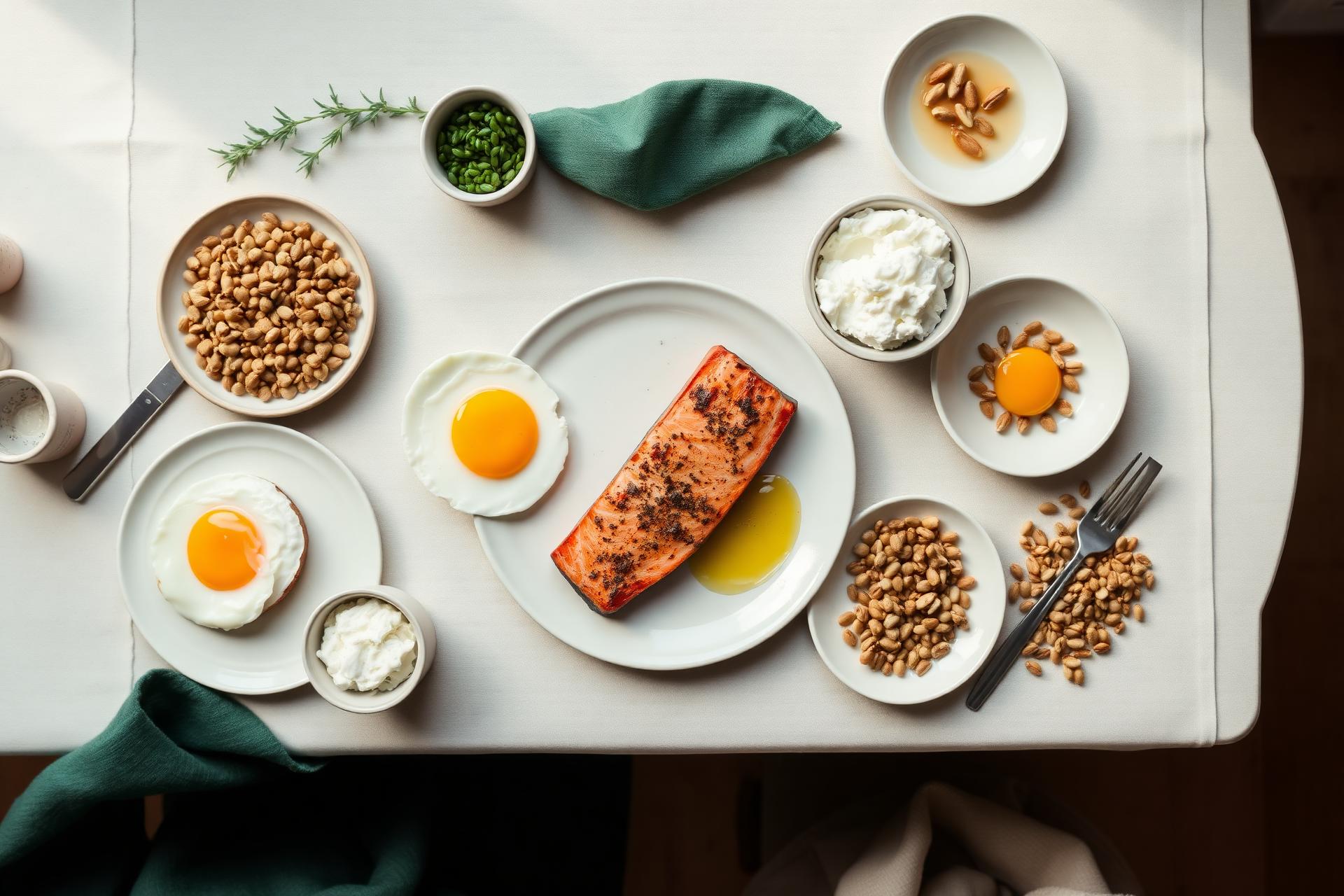
Protein
Protein is the building block of muscles, skin, enzymes and hormones, and one of the nutrients that gives the most satiety. Most people get enough protein through a varied diet, but needs can shift with age, activity level and life stage.
Quality-assured by Randi Irene Norheim, Autorisert helsepersonell
What is this?
Protein is one of the three macronutrients, alongside carbohydrates and fat. It is made up of amino acids, often called the body's building blocks, which are used to build and repair muscles, skin, hair, enzymes and hormones. Nine of the twenty amino acids are considered essential, meaning the body cannot make them itself and they must come from food.
Protein sources are typically divided into animal-based and plant-based. Animal sources such as meat, fish, eggs and dairy contain all the essential amino acids in a good balance. Many plant sources, such as beans, lentils and whole grains, may be lower in one or more essential amino acids on their own, but combining several plant sources throughout the day covers the body's needs well.
Protein provides four kilocalories per gram, the same as carbohydrates, but stands out for its high satiety effect and its role in building body tissue, not just as an energy source.
Why does it matter?
Protein is essential for maintaining and building muscle, especially combined with physical activity. It also plays a key role in immune function, wound healing, and the production of hormones and enzymes that regulate metabolism.
An adequate protein intake supports satiety and can make it easier to maintain a stable weight over time. In older adults especially, sufficient protein is important for counteracting loss of muscle mass and strength, which otherwise increases the risk of falls and reduced physical function.
Good sources
Fish and seafood
Cod, salmon, herring and shrimp provide high-quality protein along with healthy fats and iodine.
Eggs
A versatile, complete protein that fits into most meals.
Chicken and lean meat
Good sources of protein, iron and B vitamins.
Legumes
Beans, lentils and chickpeas provide protein and fibre in the same food.
Dairy products
Yoghurt, cottage cheese and milk provide protein along with calcium.
Nuts and seeds
Provide protein and unsaturated fat, good as additions or snacks.
What does the research say?
Research suggests that spreading protein intake evenly throughout the day, rather than concentrating most of it in one meal, may lead to better utilisation for muscle building. This is especially relevant for older adults and those who train strength regularly.
There is good evidence that protein-rich meals increase satiety compared with meals containing an equivalent amount of calories from carbohydrates or fat, which can be useful during weight management.
Studies show that combining strength training with adequate protein intake leads to better preservation and growth of muscle mass than training alone, in both younger and older adults.
Common misconceptions
«You need large amounts of protein powder to meet your needs.»
Most people cover their protein needs comfortably through ordinary food like fish, eggs, dairy and legumes, without supplements.
«A high protein intake damages the kidneys in healthy people.»
In people with normal kidney function, there is no good evidence that a moderate to high protein intake causes harm, but people with kidney disease should follow individual advice.
«Plant-based protein is incomplete and insufficient.»
Eating a varied diet with different plant sources throughout the day provides all the essential amino acids the body needs.
Who should pay extra attention?
- Older adults, who have an increased need for protein to counteract muscle loss
- People who do strength training or are highly physically active
- Those on vegan or vegetarian diets, who should ensure variety in protein sources
- People with reduced kidney function, who should get individual guidance
- People recovering from illness or surgery
Frequently asked questions
How much protein do I need per day?+
General recommendations are around 0.8-1.2 grams per kilogram of body weight for healthy adults, but needs may be higher with high activity levels or older age. Consult a doctor or clinical nutritionist for an individual assessment.
Is it harmful to eat a lot of protein?+
For healthy people, there is no good evidence that a protein intake above the minimum recommendation is harmful. People with kidney disease should, however, follow individual advice from healthcare professionals.
Can I get enough protein without eating meat?+
Yes. Legumes, tofu, eggs, dairy, nuts and whole grains together provide good coverage of protein needs, given a varied diet.
Should I eat protein right after training?+
It can be beneficial to consume protein within a few hours after strength training, but total daily intake and even distribution throughout the day matter more than exact timing.
Keep reading
Fibre
Fibre comes from plants and plays a key role in digestion, blood sugar regulation and a healthy gut microbiome. Most people in Norway eat less fibre than recommended, and it is often one of the easiest places to start when improving your diet.
6 min read
Calories and energy
Calories measure the energy in food and drink, and energy balance is a fundamental principle of weight development. But counting calories alone says little about food quality, satiety or health effects.
5 min read

How much protein do I need?
Most adults need roughly 1.2–1.6 grams of protein per kilogram of body weight per day, depending on age, activity level and goals. If you are older or do a lot of strength training, your needs are likely at the higher end of that range.
4 min read
No two people are alike.
That is why we do not start with a diet – we start by getting to know you. SmartEating adapts advice and meals to your body, goals and daily life, so healthy choices become easier to live with over time.