
How much protein do I need?
Most adults need roughly 1.2–1.6 grams of protein per kilogram of body weight per day, depending on age, activity level and goals. If you are older or do a lot of strength training, your needs are likely at the higher end of that range.
What is this?
Protein is the building block of muscles, skin, hormones and enzymes, and together with carbohydrates and fat is one of the three macronutrients the body needs in relatively large amounts. The recommended minimum to avoid deficiency is low, but for most people the real question isn't 'enough to survive' — it's what amount is optimal for muscle health, satiety and healthy ageing.
General guidance places protein at around 10–20 percent of energy intake, roughly 0.8–1.2 grams per kilogram of body weight for an average adult with moderate activity. Newer research and international nutrition guidance, including NNR 2023, points to higher intakes — especially for older adults and physically active people — as beneficial for preserving muscle mass.
Why does it matter?
Protein intake matters because it affects more than muscle alone: it supports satiety, stable blood sugar and the maintenance of body tissue throughout life. With age, the body's ability to build muscle protein from a given amount of protein declines, meaning older adults often need somewhat more per kilogram than younger people to achieve the same effect.
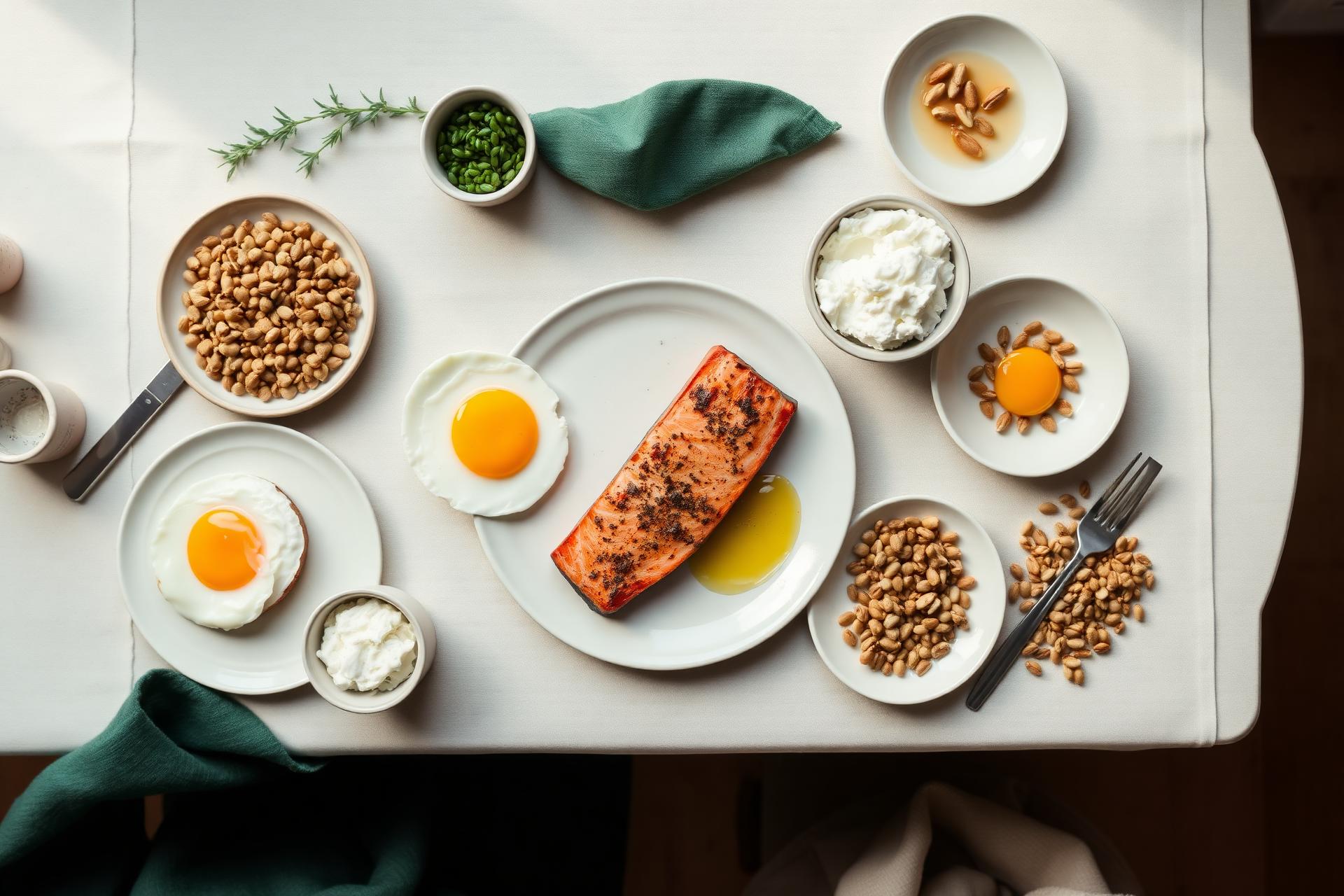
Good sources
Spread it through the day
Aim for 25–35 grams of protein per meal across 3–4 meals, rather than eating most of it in the evening.
Choose varied sources
Combine animal sources like fish, eggs and lean meat with legumes, tofu and whole grains for a broader nutrient profile.
Increase with strength training
If you train strength regularly, an intake of 1.4–1.6 grams per kilogram of body weight is often a sensible range.
Pay extra attention as you age
After 65, a somewhat higher protein intake combined with strength training can help counteract age-related muscle loss.
Don't assume more is always better
Very high intakes rarely give extra benefit for most people, and a varied diet usually covers needs well.
What does the research say?
Studies show that evenly distributing protein intake across the day can stimulate muscle protein synthesis more effectively than eating the same total concentrated in one meal. This is especially relevant for older adults, where research suggests muscles respond somewhat less to protein, sometimes referred to as anabolic resistance.
Research on athletes and strength trainers points to intakes of up to about 1.6 grams per kilogram of body weight daily as supportive of muscle growth and recovery, while further increases beyond this rarely produce measurable extra benefit for most people.
Common misconceptions
«You need protein powder to get enough protein.»
Most people can fully meet their protein needs through ordinary food such as fish, eggs, dairy, meat and legumes.
«High protein intake damages healthy kidneys.»
In people with normal kidney function there is no good evidence that a moderately high protein intake is harmful, but people with kidney disease should follow individual guidance.
«Plant protein is incomplete and inferior to animal protein.»
By varying plant sources through the day, such as legumes, whole grains and nuts, you normally get all the essential amino acids you need.
Who should pay extra attention?
- People with kidney disease should discuss protein intake with a doctor or clinical dietitian.
- Very low protein intake over time can contribute to loss of muscle mass, especially in older adults.
- Vegetarians and vegans should plan for variety in protein sources to ensure a good amino acid profile.
- Extremely high intakes over long periods are poorly studied and should not be assumed automatically safe or beneficial.
Frequently asked questions
Can I get too much protein?+
For healthy people this is rarely a problem in practice, but very high intakes give little extra benefit and shouldn't come at the expense of other nutrient-rich food.
Is protein powder necessary?+
No, it's a convenient supplement for some, but not necessary if your diet already includes good protein sources.
Do children need more protein than adults per kilogram?+
Yes, growing children and teens have higher protein needs per kilogram of body weight than adults, which is normally covered well by a varied diet.
Keep reading
Protein
Protein is the building block of muscles, skin, enzymes and hormones, and one of the nutrients that gives the most satiety. Most people get enough protein through a varied diet, but needs can shift with age, activity level and life stage.
6 min read
Muscle health
Muscles aren't just important for strength and performance — they play a central role in metabolism, balance and independence throughout life. Good muscle health is built over time, through diet and movement together.
6 min read

Older adults
With age, the body's composition and needs change, and the focus should increasingly shift toward preserving muscle mass, skeletal health, and adequate nutrient intake, even as appetite often declines somewhat.
7 min read
No two people are alike.
That is why we do not start with a diet – we start by getting to know you. SmartEating adapts advice and meals to your body, goals and daily life, so healthy choices become easier to live with over time.
