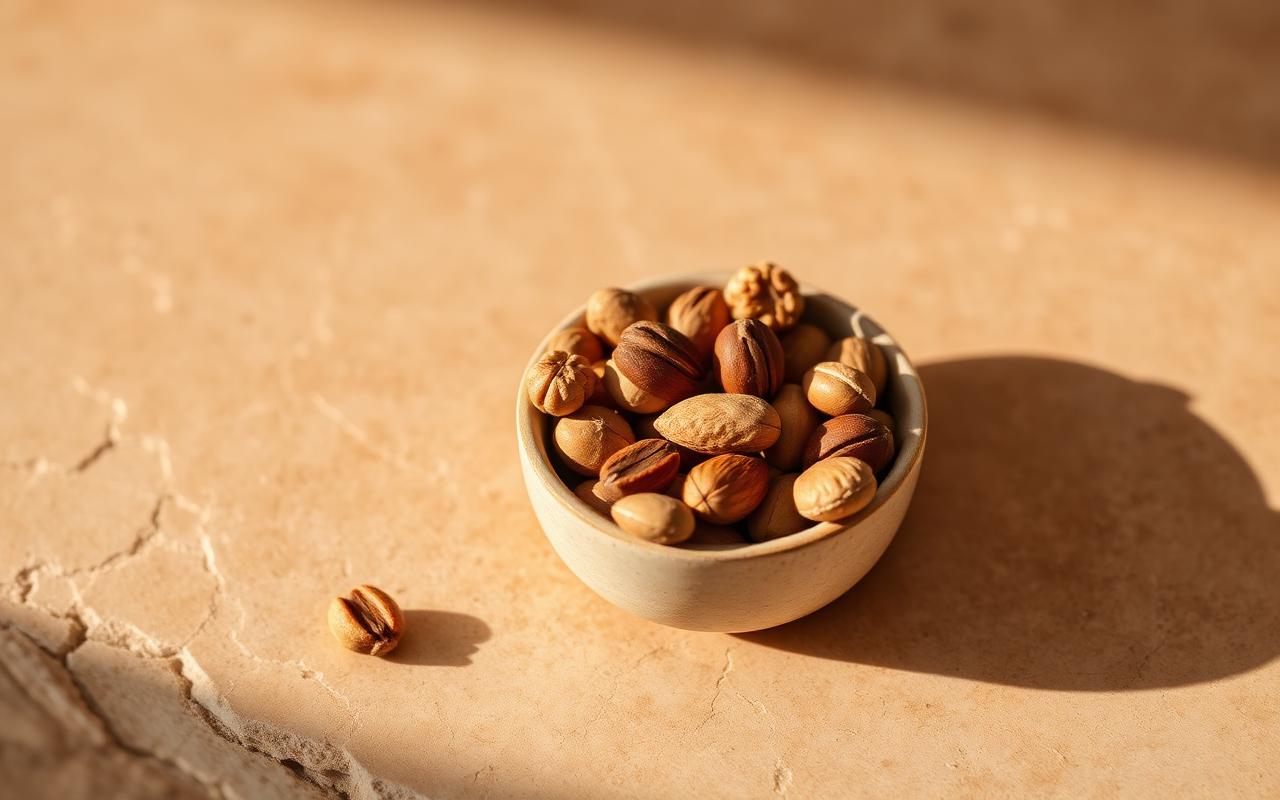
Nuts
Nuts are energy-dense yet highly nutritious, providing a good combination of healthy fats, protein, fibre and minerals. Despite their high fat content, nuts are associated with favourable health effects when eaten as part of a varied diet.
What is this?
Nuts include almonds, walnuts, hazelnuts, cashews and Brazil nuts, and while peanuts are botanically a legume, they are often grouped with nuts nutritionally. All of these are characterised by high fat content, mainly unsaturated.
Nuts also contain protein, fibre, magnesium, vitamin E and other plant compounds, with composition varying somewhat between types. Walnuts, for instance, are a good plant source of the omega-3 fatty acid ALA, while Brazil nuts are known for their high selenium content.
Because nuts are energy-dense, they are typically eaten in smaller amounts — as a topping, in baking, or as a handful of a snack — rather than as the main component of a meal.
Why does it matter?
The unsaturated fat profile of nuts contributes to a favourable effect on blood lipid levels when they replace foods higher in saturated fat. The combination of fat, protein and fibre also provides good fullness, making nuts a sensible snack in moderate amounts.
Several of the vitamins and minerals in nuts, such as magnesium and vitamin E, play a role in normal muscle and nerve function and in the body's antioxidant defences.
How to get it into your diet
A handful as a snack
A small portion of unsalted nuts provides good fullness and fits well between main meals.
In breakfast cereal or on yoghurt
Chopped nuts add crunch, protein and healthy fat to breakfast.
In salads
Toasted nuts add texture and flavour, and make the salad more filling.
Nut butter
Plain peanut or almond butter without added sugar is a nutritious spread or smoothie addition.
In baking and cooking
Nuts can be used in everything from bread and cakes to Asian stir-fries and pesto.
Choose unsalted, plain varieties
This gives you the best control over salt and sugar content compared with salted or sweetened nuts.
What does the research say?
There is good evidence that regular, moderate nut intake is associated with lower risk of cardiovascular disease, partly through a favourable effect on blood lipid levels and inflammatory markers.
Studies also suggest that nuts, despite their high energy content, don't appear to contribute to weight gain to the extent one might expect from calorie content alone, possibly because not all the fat in nuts is fully absorbed in the gut and because they provide good fullness.
Research on diets in regions known for a high proportion of healthy older adults often highlights regular, moderate nut intake as a recurring factor, alongside other dietary patterns.
Common misconceptions
«Nuts are too fatty to be part of a healthy diet.»
Although nuts are energy-dense, the fat is mainly unsaturated, and moderate intake is associated with favourable health effects, not weight gain.
«All nuts have the same nutritional value.»
Different nuts have different compositions — walnuts are rich in omega-3, Brazil nuts in selenium, and almonds in vitamin E and calcium. Variety provides the broadest nutritional contribution.
«Nut butter is always a healthy choice.»
Many commercial nut butter products contain added sugar, salt and palm oil. Look for varieties with only nuts in the ingredient list.
Who should pay extra attention?
- Nuts are among the most common and potentially serious food allergens, and people with a known nut allergy must avoid the relevant nuts and read ingredient lists carefully.
- Whole nuts should not be given to young children due to choking hazard — chopped or ground nuts are a safer alternative.
- Because nuts are energy-dense, people wanting to reduce their energy intake should be mindful of portion size.
- Salted and sweetened nut mixes should be eaten in moderation due to their salt or added sugar content.
Frequently asked questions
How many nuts should I eat daily?+
A handful, roughly 20-30 grams, is considered a reasonable daily amount for most adults as part of a varied diet.
Do nuts cause weight gain?+
Studies suggest that moderate nut intake is not associated with weight gain, and can instead contribute to fullness that supports weight management.
Are peanuts as healthy as other nuts?+
Peanuts are botanically a legume, but have a nutritional profile similar to other nuts, with good protein, fibre and unsaturated fat content.
Can children eat nuts?+
Yes, provided there's no allergy, but whole nuts should be avoided for young children due to choking hazard — use ground or finely chopped nuts instead.
Keep reading
Fat
Fat is a concentrated energy source and necessary for absorbing fat-soluble vitamins, cell membranes and hormone production. Not all fat is equal, and the type of fat you eat matters more for health than the total amount.
6 min read

Protein
Protein is the building block of muscles, skin, enzymes and hormones, and one of the nutrients that gives the most satiety. Most people get enough protein through a varied diet, but needs can shift with age, activity level and life stage.
6 min read
Fibre
Fibre comes from plants and plays a key role in digestion, blood sugar regulation and a healthy gut microbiome. Most people in Norway eat less fibre than recommended, and it is often one of the easiest places to start when improving your diet.
6 min read
No two people are alike.
That is why we do not start with a diet – we start by getting to know you. SmartEating adapts advice and meals to your body, goals and daily life, so healthy choices become easier to live with over time.