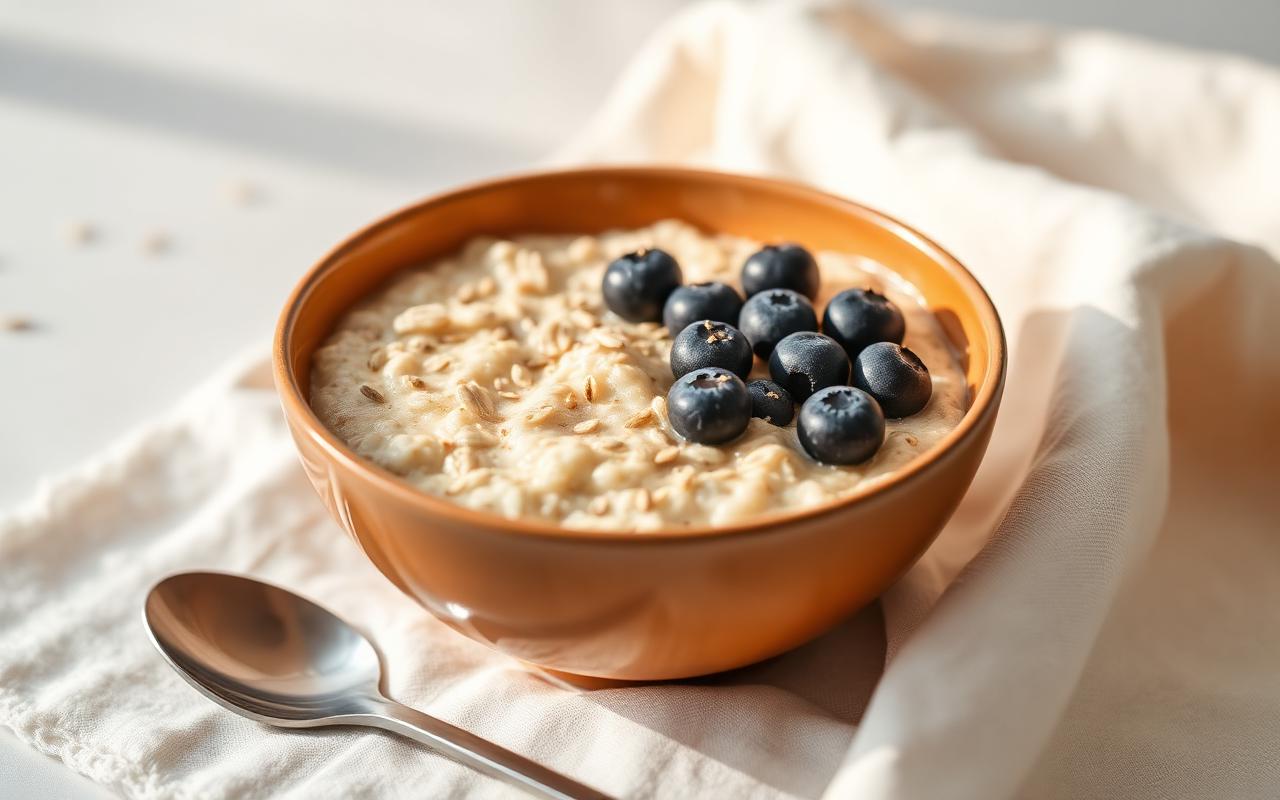
Oats
Oats are a wholegrain product that have long been a staple of Norwegian cooking, and are receiving increasing attention for their favourable nutritional profile. They are an affordable, versatile and filling source of fibre, carbohydrates, and several vitamins and minerals.
What is this?
Oats are made from rolled or cut oat grains, usually keeping the whole kernel — bran, germ and endosperm — intact. This makes oats a wholegrain product with a higher content of fibre, vitamins and minerals than more processed grain products.
Oats contain a particular type of soluble fibre called beta-glucan, which is well studied and known for its ability to bind water and form a gel-like consistency in the gut. Oats also provide protein, magnesium, zinc, iron and B vitamins.
Oats can be used for porridge, in baking, as muesli, or added to smoothies, making them a flexible ingredient suited to both sweet and more neutral dishes.
Why does it matter?
The beta-glucan in oats helps reduce cholesterol absorption in the gut and can therefore have a favourable effect on blood lipid levels. The same fibre contributes to a steadier blood sugar response after meals compared with more refined grain products.
The fibre content in oats also contributes to fullness and healthy digestion, making oatmeal a solid foundation for an energising and stabilising breakfast.
How to get it into your diet
Oatmeal porridge for breakfast
Cook oats in water or milk and top with berries, nuts or seeds for a more complete meal.
Overnight oats
Mix oats with yoghurt or milk the night before for a quick, cold breakfast the next morning.
In baking
Oats can replace part of the flour in buns, cakes and bread, giving a heartier texture.
As a topping
Toasted oats can be sprinkled over yoghurt, compote or soups for extra crunch and fibre.
In smoothies
A handful of oats gives a smoothie more substance and steadier energy through the morning.
Choose plain oats
Unsweetened varieties without added sugar give you the best control over what's in your meal.
What does the research say?
There is good evidence that beta-glucan from oats can help lower LDL cholesterol, and this is one of the clearest diet-related links in cardiovascular prevention. The effect is typically seen with regular, sufficient intake over time.
Studies also indicate that oats, as a wholegrain product, are associated with better blood sugar regulation and longer-lasting fullness compared with grain products lower in fibre. This makes oatmeal a sensible choice for steady energy through the morning.
Research on wholegrains in general, including oats, points to a link with lower risk of cardiovascular disease and certain types of cancer, although oats here represent just one of several wholegrain sources within an overall diet.
Common misconceptions
«Instant oats are just as nutritious as regular oats.»
Instant varieties are more finely milled and digested faster, which can cause a quicker rise in blood sugar. Coarser or rolled oats often provide steadier fullness.
«Oats contain gluten in the same way as wheat.»
Oats are naturally gluten-free but can become contaminated with gluten during growing or processing. People with coeliac disease should therefore choose oats labelled gluten-free.
«Oatmeal is too calorie-dense to be a healthy choice.»
Oats themselves are not particularly calorie-dense — it's often the additions, like sugar, syrup and large amounts of cream, that make ready-made versions less favourable.
Who should pay extra attention?
- People with coeliac disease should choose oats specifically labelled gluten-free to avoid cross-contamination.
- Oats can, in rare cases, cause allergic reactions, though this is less common than wheat allergy.
- Pre-mixed instant oatmeal packets and flavoured varieties can contain a lot of added sugar, so it's worth reading the ingredient list.
- With a rapid increase in fibre intake, some people may experience temporary bloating — it's recommended to increase intake gradually and drink enough water.
Frequently asked questions
Are oats gluten-free?+
Oats are naturally gluten-free, but can be contaminated with gluten from other grains during growing and processing. People with coeliac disease should choose products labelled gluten-free.
How much oatmeal should I eat to affect cholesterol?+
Regular daily intake over time, as part of an otherwise healthy diet, is what has been linked to a favourable effect on blood lipid levels.
Can I eat oats every day?+
Yes, oats can safely be part of your diet daily as part of a varied eating pattern.
Are oats good for weight management?+
The fibre content contributes to fullness, which for many people can make it easier to regulate total food intake over the day.
Keep reading
Fibre
Fibre comes from plants and plays a key role in digestion, blood sugar regulation and a healthy gut microbiome. Most people in Norway eat less fibre than recommended, and it is often one of the easiest places to start when improving your diet.
6 min read
Wholegrains
Wholegrains are grain products in which the entire kernel — bran, germ and endosperm — is preserved, unlike refined grain products where the most nutrient-rich parts are removed. Wholegrains are among the food groups with the clearest documented link to good health.
5 min read
Carbohydrates
Carbohydrates are the body's main energy source and are found in everything from fruit and vegetables to bread, pasta and sugar. The quality of the carbohydrate source matters far more for health than the amount alone.
6 min read
No two people are alike.
That is why we do not start with a diet – we start by getting to know you. SmartEating adapts advice and meals to your body, goals and daily life, so healthy choices become easier to live with over time.