Nutrition with a gastrostomy
A gastrostomy — often called a PEG or button — makes it possible to get enough nutrition when eating by mouth isn't enough. With the right plan, daily life becomes safer and more predictable.
In short
What is a gastrostomy?
A gastrostomy is an opening through the abdominal wall to the stomach, with a tube or button through which food, fluids and medication can be given.
It is used when eating by mouth does not cover needs — for example with swallowing difficulties, neurological illness, head and neck cancer, or in children with complex needs.
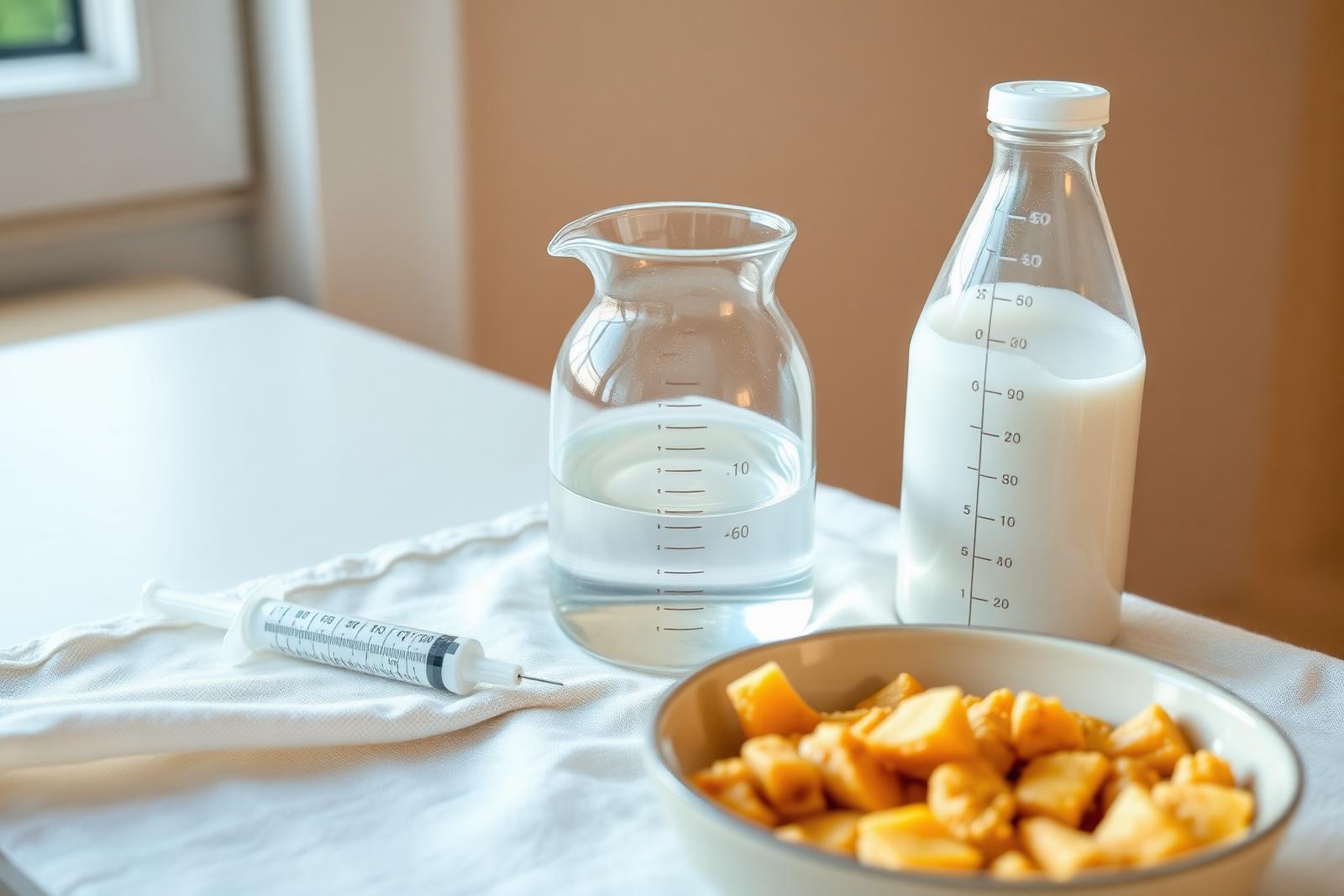
Nutrition is given either as ready-made tube feed products, as blended ordinary food where suitable, or as a combination.
Glossary
- Bolus
- A feed given over a few minutes with a syringe, like an ordinary meal.
- Continuous feeding
- Nutrition given slowly over several hours with a pump.
- Blenderized diet
- Ordinary food blended and strained for tube use, after professional assessment.

Does this sound familiar?
This might sound like your situation
Most challenges are about amount, rate, texture and distribution through the day.
- Newly operated and in the training phase
- A child with a gastrostomy who also eats a little by mouth
- An adult with neurological illness and swallowing difficulties
- Transition from hospital to home or supported housing
- A wish to use more ordinary food in the tube
SmartEating recommends
What makes the biggest difference?
This is what usually decides whether daily life with a tube feels safe and predictable.
A clear daily plan
Fixed times, amounts and flushing routines make it easier for everyone helping.
Adjust the rate first
With nausea or bloating, slowing the feed is usually the first step.
Count the fluids
Flush water and extra fluids must be part of the total fluid balance.
Flush around medication
Flushing before and after each medicine prevents a blocked tube.
Keep oral stimulation
Taste experiences and mouth care matter even when not eating normally.
Track weight and growth
Regular weighing — and growth charts in children — shows whether the plan works.
When should you contact health services?
- The tube is blocked, has come loose or fallen out
- Redness, swelling, warmth, pus or pain around the stoma
- Persistent vomiting, diarrhoea or abdominal pain
- Fever, coughing during feeds or breathing difficulty
For acute tube problems, contact the hospital or a doctor. Nutrition follow-up comes in addition to medical treatment.
Common questions
What people ask us most often.
Can you eat ordinary food alongside the tube?
Often yes, if swallowing is safe. It is assessed together with a doctor or speech therapist, and the food then comes in addition to the tube feed.
Is blended ordinary food safe in the tube?
It can work well for many, but requires the right texture, hygiene and calculation of nutrient content. Plan it with a clinical dietitian.
How often should the plan be adjusted?
Often at the start, then according to weight, symptoms and changes in treatment or activity level.
Personal nutrition
No two people with nutrition with a gastrostomy are the same
Some train a lot, some have several symptoms at once, some are pregnant, some have low values on blood tests and some have a busy family life.
That is why people in the same situation need different advice. SmartEating AI learns your situation over time and adapts suggestions to your body, goals and everyday life.
A clinical dietitian calculates energy, protein and fluid needs and sets up a concrete daily plan that fits your life.
We adjust products, amounts and rate when problems arise, and assess whether and how ordinary food can be used in the tube.
READ MORE
The knowledge behind the advice
Vitamins and minerals
Vitamins and minerals are micronutrients the body needs in small amounts, but they are essential for nearly all bodily functions. A varied diet with plenty of vegetables, fruit, whole grains and good protein sources usually covers the need without supplements.
Legumes
Legumes such as beans, lentils and chickpeas are among the most nutrient-dense and sustainable foods available. They combine plant-based protein with abundant fibre, and are a valuable food group whether you eat a lot of meat or very little.
Protein
Protein is the building block of muscles, skin, enzymes and hormones, and one of the nutrients that gives the most satiety. Most people get enough protein through a varied diet, but needs can shift with age, activity level and life stage.

Assessment
A digital form before the session so the specialist knows your situation.

Kick-off conversation
60 minutes online or at a partner clinic.
Personal plan
A concrete plan in SmartEating — food, structure and goals tailored to you.
Ready to get help with nutrition with a gastrostomy?
We'll connect you with a licensed clinical dietitian who understands your situation.

Related topics